Understand the difference between RF microneedling and traditional aesthetic microneedling for texture, pores, scars, collagen, and skin laxity.

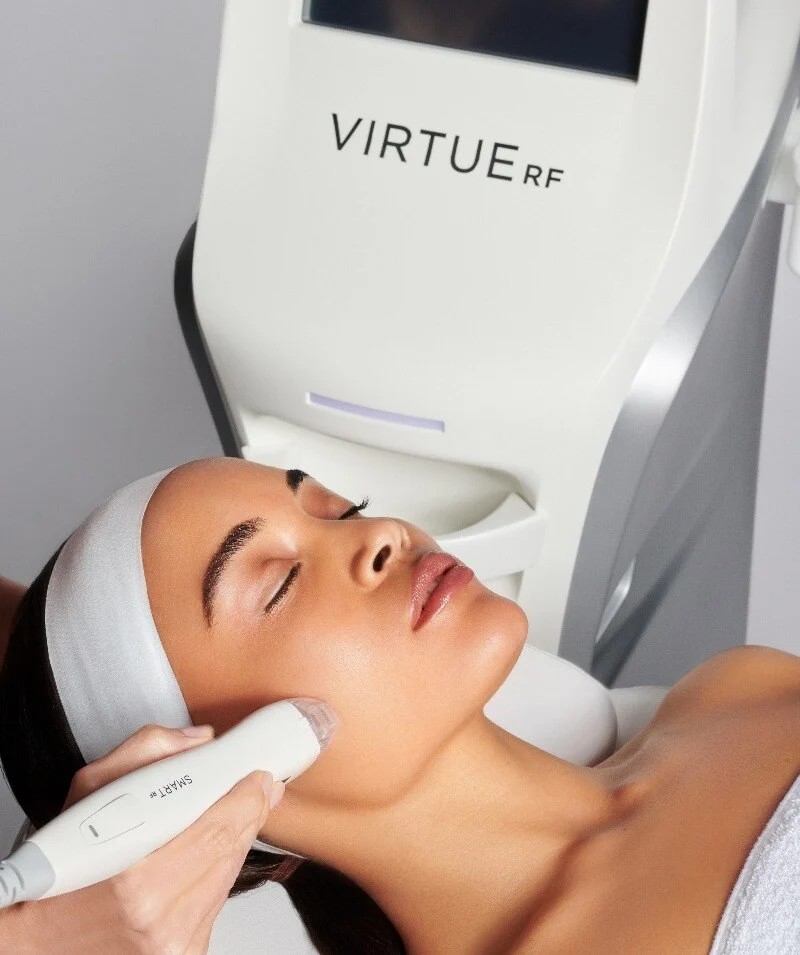
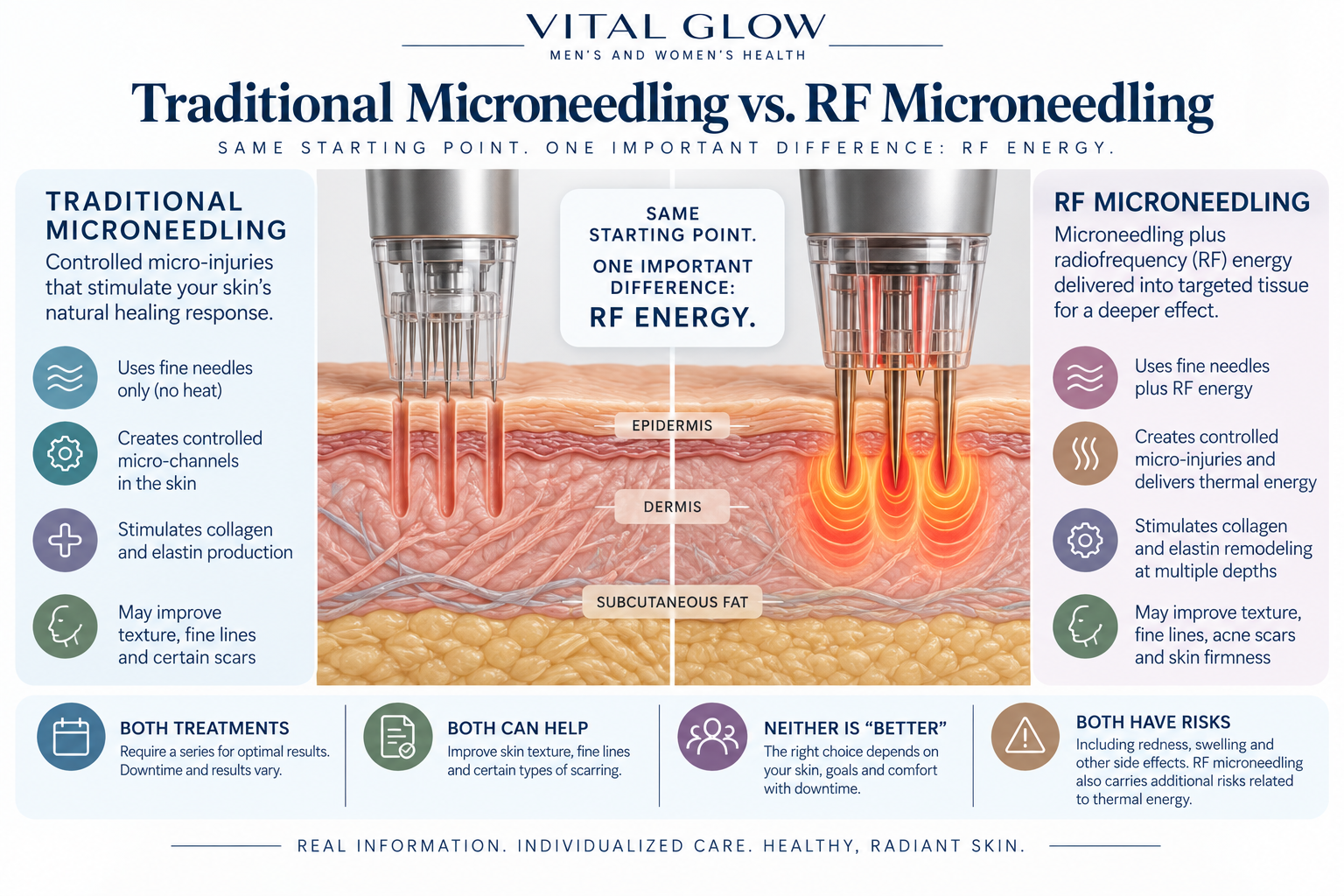
Traditional microneedling and RF microneedling both use tiny needles to create controlled micro-injuries in the skin—but RF microneedling adds something important: radiofrequency energy delivered into the tissue through the needles.
That difference changes what happens below the surface of the skin, but it does not mean RF microneedling is automatically the better treatment for every person or every concern.
If you’re comparing RF microneedling vs. traditional microneedling, the more useful question is: Which treatment better matches your skin, your goals, and the amount of treatment and recovery you’re comfortable with?
What Is Traditional Microneedling?
Traditional microneedling uses a device containing multiple small needles that repeatedly enter the skin at controlled depths.
These microscopic injuries stimulate the skin’s normal wound-healing response.
That response involves processes associated with collagen and elastin production and remodeling, which is why microneedling may be used to improve concerns involving skin texture and certain types of scarring.
The FDA has cleared certain microneedling devices for specific uses, including improvement in the appearance of facial acne scars, facial wrinkles, and abdominal scars in adults aged 22 years or older.
What Is RF Microneedling?
RF microneedling combines microneedling with radiofrequency energy.
The needles enter the skin and RF energy is delivered through the device into targeted tissue.
This means RF microneedling creates both the mechanical effect of controlled needle penetration and a controlled thermal effect from radiofrequency energy.
Depending on the device, treatment parameters can include factors such as needle depth and the amount or delivery pattern of RF energy.
That additional energy is the fundamental difference between RF microneedling and traditional microneedling.
RF Microneedling vs. Traditional Microneedling: What’s the Difference?
| Traditional Microneedling | RF Microneedling | |
|---|---|---|
| Needles | Yes | Yes |
| Controlled micro-injuries | Yes | Yes |
| Radiofrequency energy | No | Yes |
| Thermal energy delivered below the skin | No | Yes |
| Treatment parameters | Include needle depth and technique | Include needle depth plus RF-related settings |
Those differences matter because adding RF energy changes both the treatment possibilities and the risk profile.
What Can Traditional Microneedling Help Improve?
Depending on the device and individual treatment plan, microneedling may be considered for concerns such as:
- Acne scars
- Skin texture
- Fine lines and wrinkles
- Selected scars
The exact benefits depend on the device being used, the treatment parameters, the condition being treated, and the individual patient.
It is important not to assume that every microneedling device has been FDA cleared for every condition commonly advertised online.
What Can RF Microneedling Help Improve?
RF microneedling is often considered when the treatment goal involves skin texture, wrinkles, acne scarring, or other concerns where controlled thermal treatment may be useful.
Because RF energy can be delivered below the skin surface, the treatment can affect tissue differently from mechanical microneedling alone.
However, the specific device matters.
“RF microneedling” describes a category of technology rather than one standardized treatment. Devices can differ in needle design, energy delivery, depth capabilities, treatment settings, and cleared indications.
For that reason, results and risks should not be generalized from one device or treatment protocol to every RF microneedling procedure.
Is RF Microneedling Better Than Regular Microneedling?
Not automatically.
Adding radiofrequency energy creates additional treatment capabilities, but more technology does not necessarily mean a better choice for every patient.
The appropriate treatment depends on factors such as:
- The concern being treated
- Its severity
- Your skin characteristics
- Your medical history
- Previous treatments
- Your tolerance for downtime
- The device being used
- The provider’s assessment and experience
Someone seeking improvement in relatively mild texture concerns may not need the same treatment as someone with more significant acne scarring or another concern requiring a different approach.
Does RF Microneedling Tighten Skin?
Radiofrequency energy generates controlled heat in targeted tissue, which is why RF-based aesthetic treatments are frequently used when collagen remodeling and skin firmness are treatment goals.
However, “skin tightening” is not an all-or-nothing result.
The degree of improvement varies based on the device, treatment settings, anatomy, degree of skin laxity, age, healing response, and other individual factors.
RF microneedling also should not be presented as equivalent to surgical tightening for significant skin laxity.
Which Is Better for Acne Scars?
Both microneedling and RF microneedling may be considered in acne-scar treatment, depending on the type and severity of scarring.
But “acne scars” are not all the same.
Different scar patterns may respond differently to treatment, and some patients benefit from a combination of approaches rather than a single procedure.
This is why evaluating the type of scarring is more useful than simply choosing whichever device sounds more advanced.
What Does RF Microneedling Feel Like?
Comfort varies based on the device, treatment area, settings, needle depth, and individual sensitivity.
A topical anesthetic may be used before treatment to improve comfort.
Patients may experience pressure, warmth, prickling, or brief discomfort during treatment.
Your provider should discuss what to expect before beginning the procedure.
What Is the Downtime After Microneedling?
Traditional microneedling commonly causes temporary redness, swelling, tenderness, dryness, or flaking.
The skin can temporarily resemble a mild to moderate sunburn.
Recovery varies based on treatment intensity and individual response.
More aggressive treatment generally has the potential to produce more noticeable short-term effects.
What Is the Downtime After RF Microneedling?
RF microneedling can also cause temporary redness, swelling, tenderness, pinpoint marks, dryness, or changes in skin texture during healing.
Because RF microneedling introduces thermal energy in addition to needle penetration, its effects and potential complications are not identical to those of traditional microneedling.
Your expected recovery should be discussed based on the specific device and settings being used.
What Are the Risks of Microneedling?
The FDA lists potential risks of microneedling that include:
- Redness
- Dryness
- Skin tightness
- Itching
- Peeling
- Bleeding
- Bruising
- Burning or discomfort
- Infection
- Changes in pigmentation
Some people may not be appropriate candidates because of medical conditions, medications, active skin problems, healing concerns, pregnancy, or other factors.
This is why screening before treatment matters.
Are There Additional Risks With RF Microneedling?
Yes. The addition of radiofrequency energy introduces risks associated with delivering heat into tissue.
In October 2025, the FDA issued a safety communication after receiving reports of serious complications associated with certain uses of RF microneedling devices.
Reported complications included:
- Burns
- Scarring
- Fat loss
- Disfigurement
- Nerve damage
These reports do not mean that every RF microneedling treatment causes serious complications.
They do reinforce why device selection, appropriate treatment parameters, patient selection, provider training, and medical oversight matter.
The FDA specifically advises patients to work with a licensed healthcare provider who has training and experience with RF microneedling procedures.
Can RF Microneedling Cause Facial Fat Loss?
Fat loss has been among the serious complications reported to the FDA following certain uses of RF microneedling.
That does not mean facial fat loss is an expected result of properly performed RF microneedling.
It does mean that energy delivery and treatment depth should be taken seriously, particularly in areas where preserving facial volume is important.
Ask your provider which device is being used, how treatment settings are selected, and how your anatomy influences the treatment plan.
Can Microneedling Be Combined With PRP?
You may see microneedling combined with platelet-rich plasma, or PRP, in aesthetic marketing.
It is important to distinguish common practice from FDA clearance.
The FDA states that it has not cleared microneedling devices for use with another product such as PRP.
If a combination treatment is recommended, ask why it is being used, what evidence supports it, and what additional risks or limitations should be considered.
How Many Treatments Will I Need?
There is no single number that applies to everyone.
The number and spacing of treatments depend on factors including:
- The condition being treated
- The device
- Treatment intensity
- Your skin’s response
- Your goals
- Whether other treatments are being incorporated
Some concerns may require a series of treatments followed by reassessment.
A treatment package should not substitute for determining whether the procedure is appropriate in the first place.
How Long Does It Take to See Results?
Some changes may become noticeable as the skin recovers, while collagen remodeling occurs gradually.
For that reason, the final result should not necessarily be judged immediately after treatment.
Improvement can continue over the weeks and months following a treatment series.
Standardized before-and-after photographs can help evaluate changes more objectively.
How Do You Choose Between RF Microneedling and Traditional Microneedling?
Start with the concern you want to improve rather than the name of the device.
A useful consultation should consider:
- What bothers you about your skin
- Whether microneedling is appropriate for that concern
- Whether adding RF energy offers a meaningful advantage for your goals
- Your skin and medical history
- Expected downtime
- Potential risks
- Realistic improvement
- Alternative treatments
The most aggressive option is not automatically the best option.
RF Microneedling and Skin Rejuvenation in Columbia, SC
Vital Glow offers individualized skin-rejuvenation treatments for patients in Columbia and surrounding Midlands communities.
Rather than selecting a procedure solely because it uses more advanced technology, treatment begins with the concern you want to address and an assessment of which approach may be appropriate.
That includes discussing expected results, recovery, risks, and alternatives before treatment.
Learn more about skin rejuvenation at Vital Glow →
Frequently Asked Questions About RF Microneedling
What is the main difference between RF microneedling and regular microneedling?
Both use small needles to create controlled micro-injuries. RF microneedling additionally delivers radiofrequency energy into targeted tissue, creating a controlled thermal effect.
Is RF microneedling better than microneedling?
Not for every person or concern. RF adds another treatment mechanism, but whether that provides a useful advantage depends on the condition being treated, your skin, the device, treatment settings, and your goals.
Does RF microneedling tighten skin?
RF energy can be used to produce controlled heating associated with collagen remodeling and improvements in skin firmness. Results vary and should not be compared with the degree of tightening possible through surgery.
Can RF microneedling cause fat loss?
The FDA has received reports of fat loss following certain uses of RF microneedling devices. It is considered a potential serious complication rather than an expected cosmetic outcome.
Can RF microneedling cause burns?
Burns have been among the serious complications reported to the FDA. Appropriate equipment, settings, technique, patient selection, and provider training are therefore important.
Which treatment has more downtime?
Recovery varies substantially with device and treatment intensity. RF microneedling adds thermal energy, while traditional microneedling relies on controlled mechanical injury alone. Your provider should explain the expected recovery for the specific treatment being recommended.
How many RF microneedling treatments do I need?
There is no universal number. Treatment frequency depends on the concern being addressed, device, treatment intensity, individual response, and treatment plan.
Can microneedling be combined with PRP?
The combination is offered in some practices, but the FDA states that microneedling devices have not been cleared for use with another product such as PRP. Discuss the evidence, risks, and rationale with your provider if a combination procedure is recommended.
Medically reviewed by Candace Danbury, MSN, APRN, FNP-BC.