Learn how IV therapy and wellness injections may support hydration, nutrients, recovery, GLP-1 care, and wellness goals at Vital Glow.

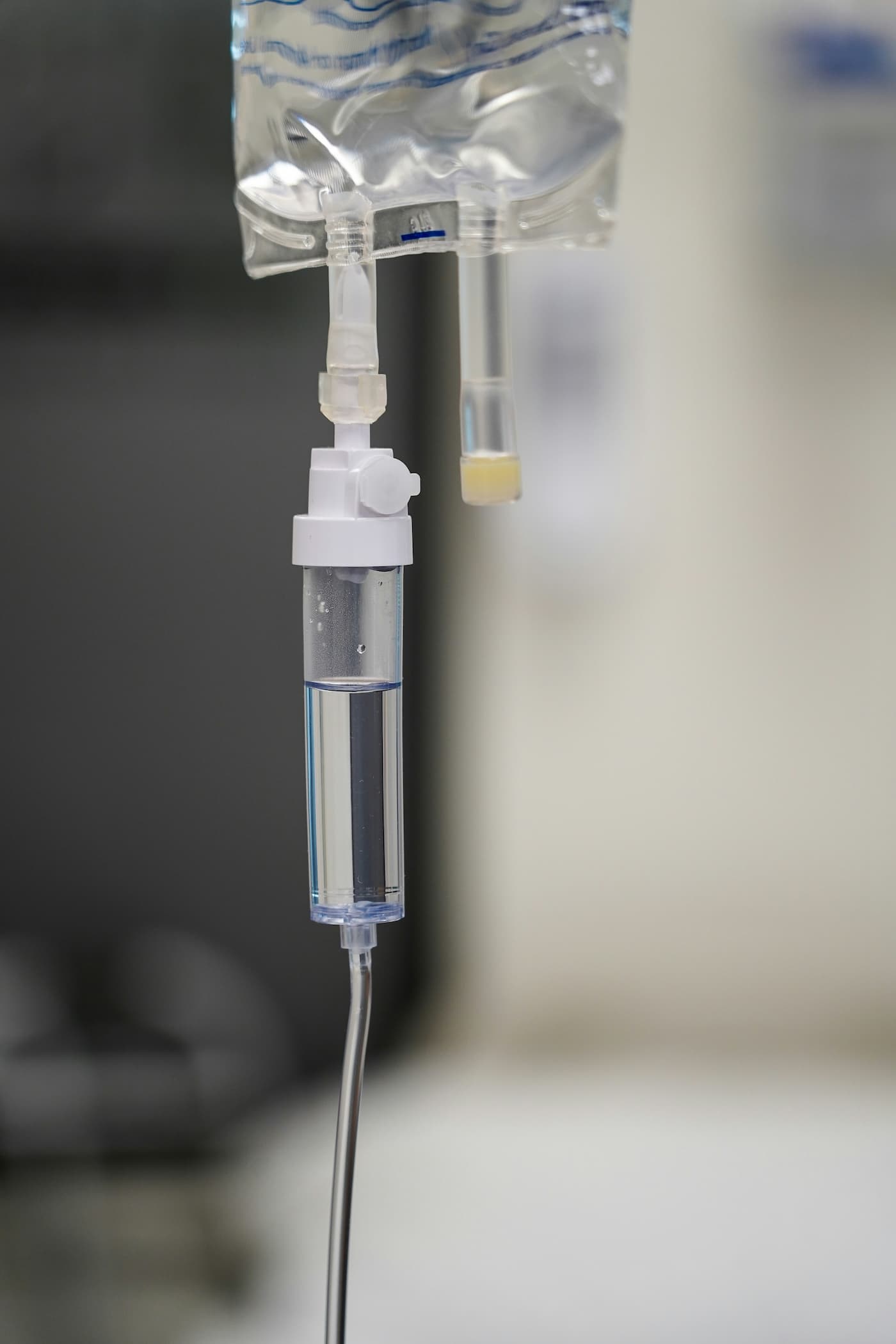
IV therapy delivers fluids and selected nutrients directly into the bloodstream through a vein. That makes intravenous treatment useful in many established medical situations—but it does not mean that every IV marketed for “wellness” has been proven to improve energy, immunity, detoxification, or overall health.
For someone considering an IV hydration treatment or wellness injection, the important questions are straightforward: What is being administered? Why are you receiving it? Is there a reason you may need it? What evidence supports the expected benefit? And is it appropriate for your health history?
At Vital Glow, IV therapy and wellness injections should be approached as individualized services rather than universal shortcuts to feeling better.
What Is IV Therapy?
IV stands for intravenous, meaning that fluid is administered directly into a vein.
An IV infusion may contain fluid alone or fluid combined with specific medications, electrolytes, vitamins, or other ingredients depending on its intended purpose.
Because the contents enter the bloodstream directly, IV administration bypasses absorption through the digestive system.
That is useful when intravenous administration is medically indicated. However, bypassing the digestive system does not by itself mean that an IV produces superior health benefits for an otherwise healthy person.
What Is IV Hydration?
IV hydration typically uses intravenous fluid to replace water and electrolytes.
In conventional medical care, IV fluids are commonly used when someone cannot adequately replace fluids orally or when fluid loss or illness makes intravenous replacement appropriate.
For mild dehydration in an otherwise healthy person who can drink normally, oral fluids are often sufficient.
IV hydration may make more sense when oral hydration is difficult, poorly tolerated, or inadequate for the situation—but the reason for dehydration matters.
How Is IV Hydration Different From Drinking Water?
The major difference is the route of administration.
When you drink water or an electrolyte beverage, fluid is absorbed through the gastrointestinal tract. With an IV, fluid enters the circulation directly.
That does not mean everyone hydrates “better” through an IV.
For people who can drink and absorb fluids normally, oral hydration is generally simpler and avoids the risks associated with placing an intravenous catheter.
The value of IV hydration therefore depends on the situation rather than on the assumption that intravenous delivery is automatically superior.
What Can Be Included in an IV Infusion?
The contents of an IV depend on the specific treatment.
Depending on the formulation and clinical circumstances, an infusion may contain:
- IV fluids
- Electrolytes
- Selected vitamins
- Selected minerals
- Other ingredients appropriate to the treatment being provided
You should know what is being administered before receiving an infusion.
More ingredients do not necessarily make an IV more effective, and an ingredient having an important function in the body does not automatically mean that receiving extra amounts intravenously improves health.
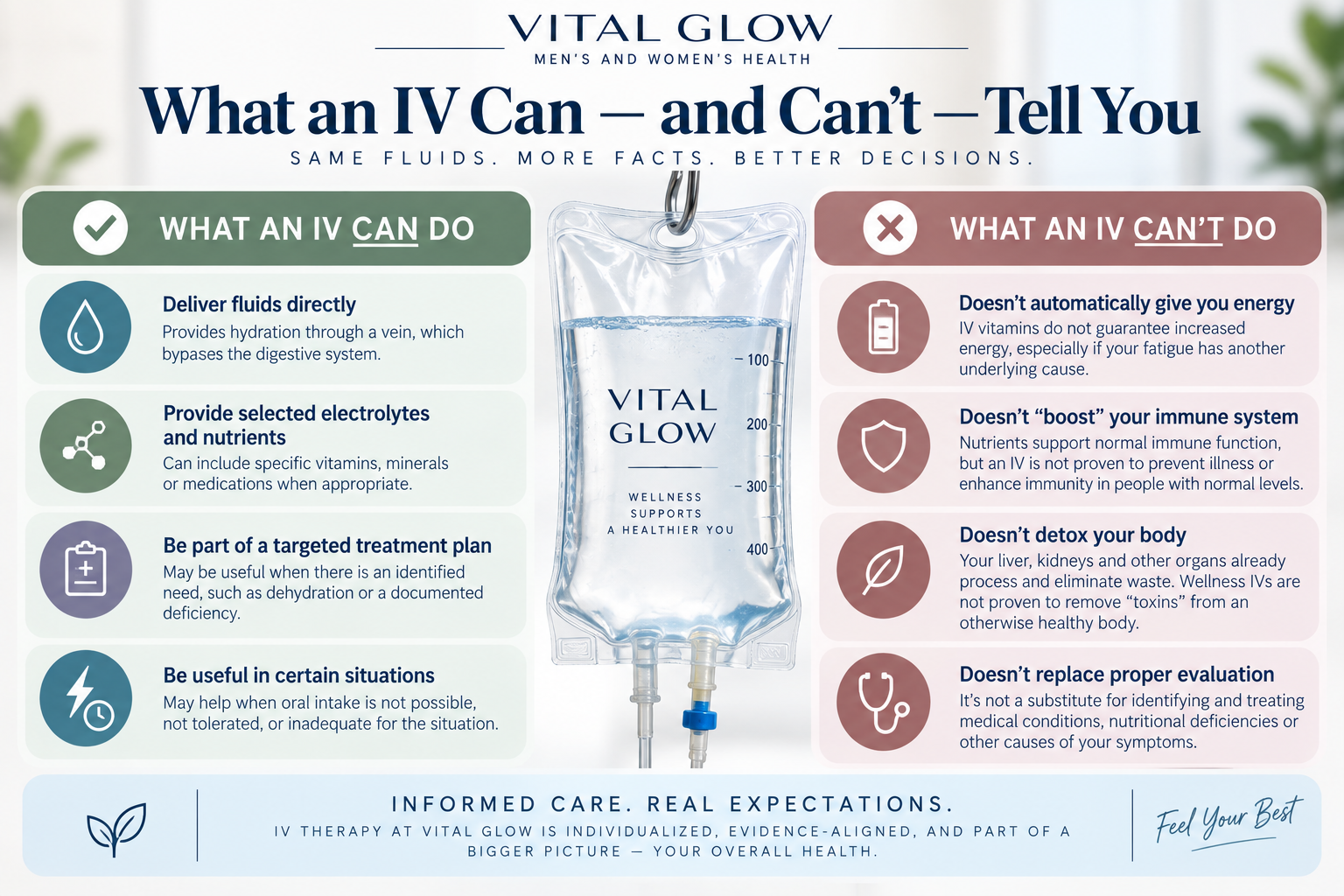
Do IV Vitamins Give You More Energy?
Fatigue has many possible causes.
Sleep deprivation, stress, inadequate nutrition, anemia, thyroid disease, hormonal changes, medications, illness, depression, and other medical conditions can all contribute to low energy.
If fatigue is caused by a specific nutrient deficiency, correcting that deficiency may help.
But giving additional vitamins to someone who already has adequate levels does not automatically address the cause of fatigue.
Persistent or unexplained low energy deserves evaluation rather than assuming that the solution is an IV infusion.
Can IV Therapy Boost the Immune System?
Claims that wellness IVs broadly “boost immunity” should be treated cautiously.
Vitamins and minerals are necessary for normal immune function, and deficiencies can impair normal physiology. Correcting an actual deficiency is different from claiming that high doses of nutrients will enhance immune function beyond normal levels or prevent illness.
An IV should not be presented as a substitute for established preventive care, appropriate nutrition, sleep, vaccination, or medical treatment when someone is ill.
Does IV Therapy Detox Your Body?
“Detox” is one of the most common terms used in wellness marketing, but it is often poorly defined.
Your liver, kidneys, lungs, gastrointestinal system, and other organs continually process and eliminate substances from the body.
An IV may provide fluid or particular nutrients, but that does not establish that a general wellness infusion removes unspecified “toxins” from an otherwise healthy body.
If a treatment is described as detoxifying, it is reasonable to ask exactly what substance is supposedly being removed and what evidence demonstrates that effect.
What About Vitamins and Nutrients Delivered by Injection?
Not every nutrient treatment requires an IV.
Certain vitamins or medications can also be administered by intramuscular or subcutaneous injection when clinically appropriate.
One familiar example is vitamin B12.
Vitamin B12 is necessary for normal red blood cell formation and neurological function. Some people develop B12 deficiency because of dietary factors, medications, gastrointestinal conditions, pernicious anemia, or problems absorbing the vitamin.
When B12 deficiency is present, treatment may include oral supplementation or injections depending on the cause and clinical circumstances.
That is different from assuming that a B12 injection will provide an energy boost to every person who receives one.
Should Vitamin Levels Be Tested First?
It depends on the nutrient and the reason treatment is being considered.
Laboratory testing can be useful when symptoms, medical history, medications, dietary factors, or other findings suggest a possible deficiency.
Testing every nutrient in every person is not necessary, but neither is assuming that symptoms such as fatigue prove a deficiency exists.
When appropriate, targeted laboratory testing can help determine whether an identifiable medical or nutritional issue may be contributing to symptoms.
Can You Get Too Many Vitamins?
Yes.
The idea that excess vitamins are always harmless because the body will simply eliminate whatever it does not need is an oversimplification.
Some vitamins are water-soluble and others are fat-soluble. Nutrients can have side effects, interact with medications, or become harmful at excessive doses.
Even nutrients that are essential for health are not automatically beneficial in unlimited amounts.
This is another reason to know exactly what an IV or injection contains and why those ingredients are being used.
Are IV Infusions Risk-Free?
No medical procedure is completely risk-free.
Potential problems associated with intravenous treatment can include:
- Pain or discomfort at the IV site
- Bruising
- Bleeding
- Infiltration of fluid into surrounding tissue
- Inflammation of the vein
- Infection
- Allergic or other reactions to an ingredient
- Fluid or electrolyte problems in susceptible patients
The relevance of these risks varies based on the person, the ingredients administered, the dose, and the clinical circumstances.
A wellness treatment being elective does not eliminate the need for appropriate screening, sterile technique, dosing, and medical oversight.
Who Should Be Cautious About IV Therapy?
Your medical history matters before receiving an IV infusion.
Conditions affecting the kidneys, heart, fluid balance, or electrolyte regulation may change whether a particular infusion is appropriate.
Pregnancy, medications, allergies, previous reactions, and other medical conditions may also affect treatment decisions.
Tell your provider about relevant medical conditions and medications before receiving an infusion or injection.
When Should You Seek Medical Care Instead of a Wellness IV?
An elective IV service should not delay evaluation of symptoms that may represent a medical problem.
Seek appropriate medical care for concerning symptoms such as:
- Severe or persistent vomiting or diarrhea
- Confusion
- Fainting
- Chest pain
- Difficulty breathing
- Severe weakness
- Very little urine output
- Signs of severe dehydration
- Symptoms that are rapidly worsening or unexplained
The correct treatment for significant dehydration or illness depends on its severity and underlying cause.
What Should You Ask Before Getting an IV?
Before an elective infusion, useful questions include:
- What exactly is in the IV?
- What dose of each ingredient am I receiving?
- Why is each ingredient being included?
- What benefit should I realistically expect?
- Is that benefit supported by evidence?
- Do I have any conditions or medications that make this treatment inappropriate?
- Who prescribed or authorized the treatment?
- Who will administer it?
- What side effects or complications should I watch for?
A reputable provider should be able to answer those questions clearly without relying on vague promises about detoxification, immunity, or “optimization.”
Are Wellness Injections Worth It?
That depends entirely on what is being injected and why.
A treatment used to correct a documented deficiency has a very different rationale from an injection offered to every person as a general wellness enhancer.
Instead of asking whether wellness injections as an entire category “work,” ask whether the specific treatment has a reasonable purpose for you.
IV Therapy and Wellness Injections in Columbia, SC
Vital Glow offers IV therapy and wellness injections for appropriate patients in Columbia and surrounding Midlands communities.
Our approach is based on choosing treatments for a reason rather than assuming that more vitamins or more ingredients automatically produce better health.
Depending on your goals and health history, that may involve discussing hydration, symptoms, nutrition, medications, or whether additional evaluation is appropriate.
If persistent fatigue or another symptom is what brought you in, the next step may sometimes be understanding why you feel that way rather than simply selecting an infusion from a menu.
Learn more about IV therapy and wellness injections at Vital Glow →
Frequently Asked Questions About IV Therapy
Does IV hydration work faster than drinking water?
IV fluid enters the circulation directly, while oral fluid must be absorbed through the gastrointestinal tract. However, most people who are mildly dehydrated and able to drink can hydrate orally. Whether an IV is appropriate depends on the circumstances.
Does IV therapy give you energy?
An IV does not automatically increase energy. If fatigue is related to dehydration or a correctable deficiency, addressing that problem may help. Persistent fatigue can have many other causes that may require evaluation.
Do vitamin IVs boost immunity?
Vitamins and minerals support normal immune function, particularly when a deficiency exists. That does not establish that receiving additional nutrients intravenously broadly “boosts” immunity or prevents illness in people who already have adequate nutrient levels.
Do IVs detox your body?
There is not good evidence that general wellness IVs remove vaguely defined toxins from otherwise healthy people. The body’s liver, kidneys and other systems already perform essential processing and elimination functions.
Are B12 injections good for fatigue?
B12 treatment can be important for people who are deficient. Fatigue alone does not establish B12 deficiency, and additional B12 does not necessarily improve energy when B12 status is already adequate.
Is IV therapy safe?
IV therapy is commonly performed, but it is not risk-free. Potential complications include bruising, infection, vein irritation, infiltration, reactions to ingredients, and fluid or electrolyte problems in susceptible people.
Do I need labs before an IV?
Not necessarily. Whether testing is useful depends on the treatment being considered, your symptoms, medical history, medications, and suspected deficiencies or health conditions.
How often should I get an IV?
There is no evidence-based universal schedule for elective wellness IV therapy. Frequency should depend on the reason for treatment rather than an assumption that everyone benefits from routine infusions.
Medically reviewed by Candace Danbury, MSN, APRN, FNP-BC.