Short answer: Hormone replacement therapy (HRT) can be an appropriate and effective treatment for many women with bothersome perimenopause or menopause symptoms, but it is not equally appropriate for everyone. Safety depends on factors such as your age, health history, symptoms, whether you still have a uterus, the hormones being considered, how they are given, …


Short answer: Hormone replacement therapy (HRT) can be an appropriate and effective treatment for many women with bothersome perimenopause or menopause symptoms, but it is not equally appropriate for everyone. Safety depends on factors such as your age, health history, symptoms, whether you still have a uterus, the hormones being considered, how they are given, and your individual risk factors.
That is why the question “Is HRT safe?” rarely has a useful yes-or-no answer.
A better question is: What are the likely benefits and risks of hormone therapy for me, using this particular treatment?
This distinction matters because much of the fear surrounding hormone replacement therapy comes from treating HRT as though every woman, every hormone, every dose, and every method of delivery carries the same risk. They do not.
What are the benefits of hormone replacement therapy?
Hormone therapy is one of the most effective treatments available for several symptoms associated with the menopause transition.
The Menopause Society identifies hormone therapy as the most effective treatment for bothersome hot flashes. It can also help with night sweats and associated sleep disruption.
The FDA identifies hot flashes, night sweats, vaginal dryness, and painful sex among symptoms that menopausal hormone therapy may help treat. Hormone therapy may also help prevent bone loss in appropriate patients.
That does not mean every symptom that appears during midlife will respond to hormones. Fatigue, mood changes, poor sleep, weight changes, low libido, and brain fog can have multiple causes.
A good evaluation therefore starts by identifying the symptoms that are actually affecting your quality of life and determining whether hormone therapy is likely to address them.
Why do so many women believe HRT is dangerous?
Modern conversations about HRT are still heavily influenced by concerns that emerged more than two decades ago from the Women’s Health Initiative and the way its findings were initially communicated to the public.
Those concerns changed prescribing dramatically and contributed to many women becoming fearful of hormone therapy.
Since then, researchers and professional organizations have continued examining how factors such as a woman’s age, time since menopause, type of hormone therapy, dose, and route of administration affect the balance of benefits and risks.
The conversation has consequently become much more individualized.
In 2026, the FDA approved labeling changes for several menopausal hormone therapy products, including removal of certain cardiovascular disease, breast cancer, and probable dementia statements from the boxed warning. The FDA did not declare HRT risk-free; rather, the changes reflected its updated assessment of how those risks should be communicated.
That distinction is important. The modern evidence does not support treating HRT as universally dangerous, but neither does it support treating hormones as universally safe.
Who may be a good candidate for HRT?
For many healthy women experiencing bothersome menopause symptoms, the balance of benefits and risks can be favorable.
Age alone, however, does not determine whether someone should receive treatment.
A provider should consider the severity of symptoms, medical and surgical history, medications, cardiovascular and blood-clot risk, cancer history, abnormal bleeding, liver health, whether the patient has a uterus, and her personal treatment goals.
Women experiencing symptoms before their periods have stopped may also be evaluated for treatment. We discuss that separately in our guide to starting HRT during perimenopause.
Who may not be a good candidate for systemic HRT?
There are situations in which systemic hormone therapy may be inappropriate or require more specialized evaluation.
The FDA advises that menopausal hormone therapy may not be appropriate for women with certain histories, including some hormone-sensitive cancers, unexplained vaginal bleeding, previous blood clots, stroke or heart attack, and liver disease.
Individual circumstances matter, however, and a medical history should be evaluated rather than reduced to an online checklist.
Someone who is not an appropriate candidate for one form of hormone therapy may also have other hormonal or nonhormonal treatment options depending on the symptom being treated.
Does the type of HRT change the risk?
Yes. “HRT” is an umbrella term rather than one single medication.
Hormone therapy can differ by:
- Which hormone or hormones are used
- Whether estrogen is used alone or with a progestogen
- Dose
- Oral versus transdermal delivery
- Systemic versus local treatment
- Duration of treatment
- The patient’s age and health history
The easiest way to understand HRT safety is to think about three separate pieces: the patient, the treatment, and the follow-up.
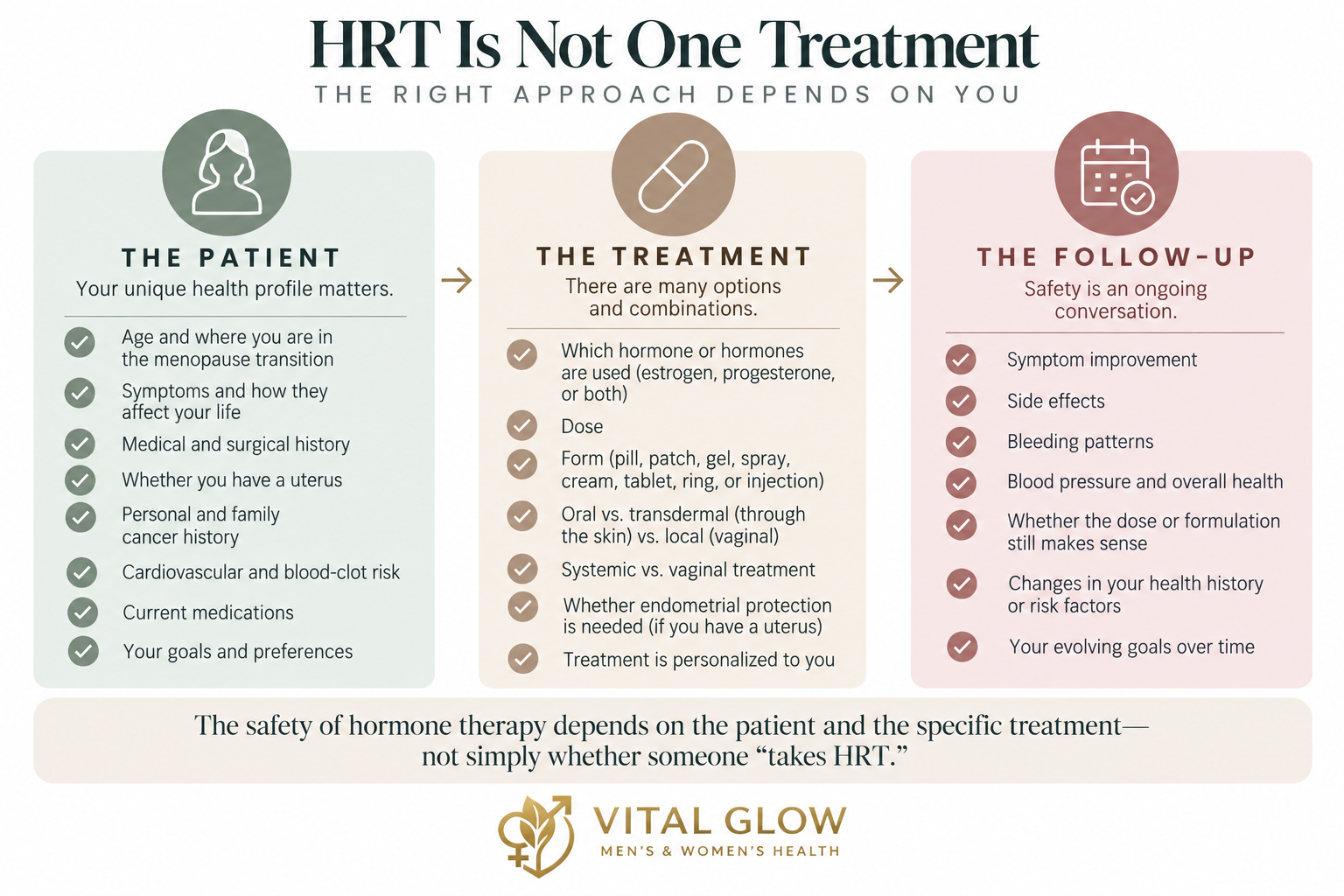
HRT is not one standardized treatment. Age, symptoms, medical history, formulation, route of administration, dose, and ongoing follow-up can all affect the benefit-risk discussion.
For example, systemic estrogen can be delivered orally or through the skin with options such as patches, gels, or sprays.
Route can matter. Oral and transdermal estrogen are processed differently by the body, and available evidence suggests transdermal therapy may have a different risk profile for some patients. Treatment route should therefore be considered alongside the patient’s individual health history and risk factors.
This is one reason comparing “HRT” with “no HRT” without discussing the actual medication can oversimplify the decision.
What is the difference between systemic HRT and vaginal estrogen?
Systemic hormone therapy circulates throughout the body and is used when treatment needs to address symptoms such as hot flashes and night sweats.
Low-dose vaginal estrogen is different. It is used primarily for vaginal and urinary symptoms associated with menopause, such as dryness and painful sex, and results in much less systemic exposure.
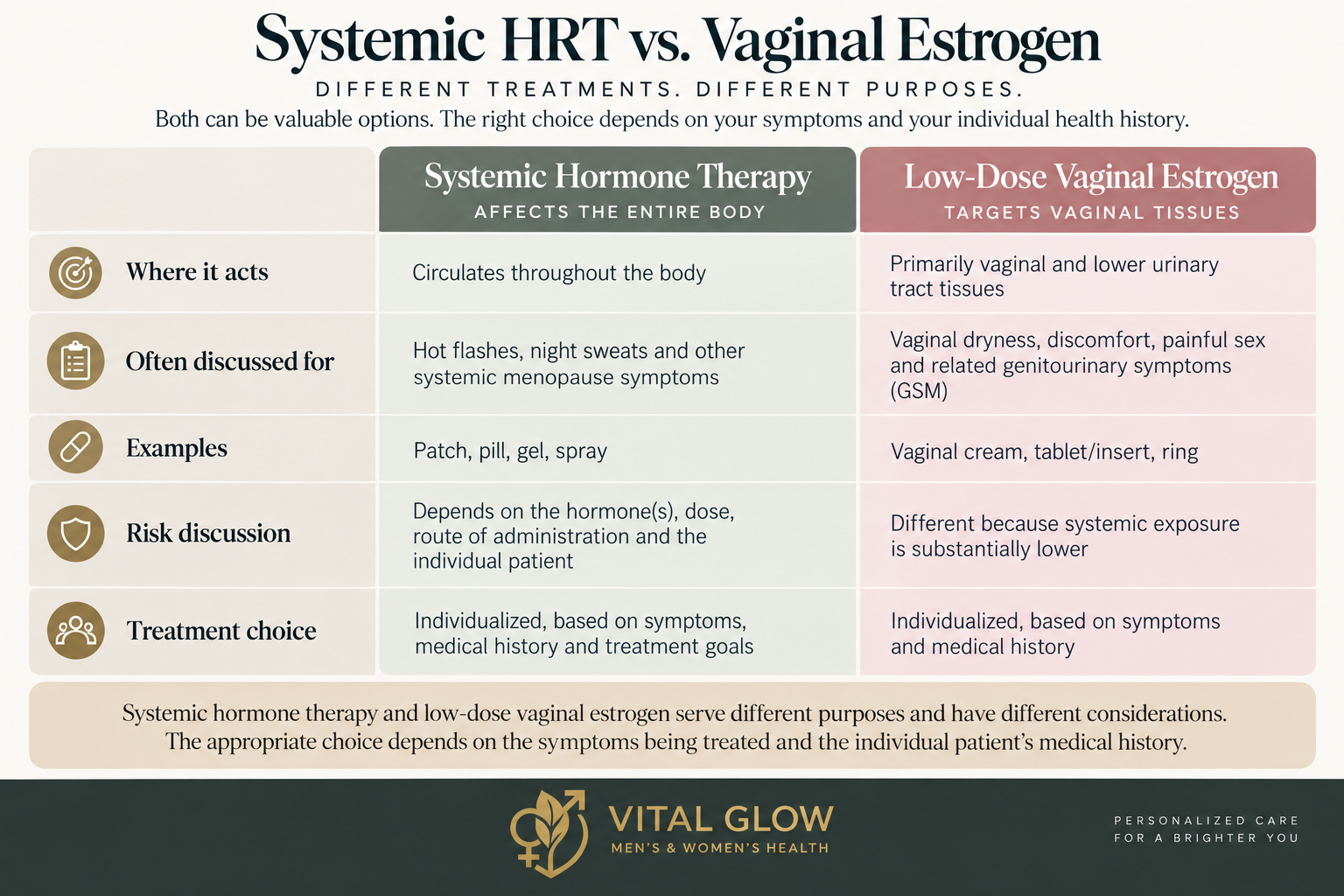
Systemic hormone therapy and low-dose vaginal estrogen serve different purposes and have different considerations. The appropriate choice depends on the symptoms being treated and the individual patient’s medical history.
Because the treatments are different, their risk profiles are also different.
A woman whose primary problem is vaginal dryness may therefore need a very different conversation from a woman experiencing severe hot flashes, night sweats, and sleep disruption.
Why does having a uterus matter when taking estrogen?
This is one of the most important distinctions in hormone therapy.
In a woman who still has her uterus, systemic estrogen used by itself can stimulate the uterine lining and increase the risk of endometrial cancer.
For this reason, women with a uterus who use systemic estrogen generally need adequate endometrial protection with a progestogen.
A woman who has undergone hysterectomy may have different treatment options.
This is a good example of why two women of the same age with identical symptoms may appropriately receive different hormone regimens.
Does HRT cause breast cancer?
This question deserves more nuance than either “yes” or “no.”
Breast cancer risk varies according to the hormone regimen and duration of treatment, among other individual factors.
Estrogen-only therapy and combined estrogen-progestogen therapy do not have identical risk profiles. The Menopause Society also notes that duration matters when evaluating breast cancer risk.
A patient’s personal and family history should therefore be part of the conversation before treatment begins.
The goal should not be to minimize legitimate risks or magnify them. It should be to understand the absolute benefits and risks that are most relevant to the individual patient.
Does HRT cause blood clots or heart problems?
Some hormone therapy regimens can affect the risk of blood clots, stroke, and cardiovascular disease, but the relationship depends partly on the patient’s underlying risk and the type and route of therapy.
Oral estrogen and transdermal estrogen are processed differently by the body, which is one reason route of administration may matter when evaluating clotting risk.
Cardiovascular history, smoking status, blood pressure, metabolic health, previous blood clots, age, and other factors may all influence the treatment decision.
This is another reason a personalized medical evaluation is more useful than asking whether HRT is simply “good” or “bad.”
Are bioidentical hormones safer?
The word bioidentical can create additional confusion.
Bioidentical generally refers to hormones that have the same molecular structure as hormones produced by the human body. That does not automatically mean a product is compounded.
There are FDA-approved hormone medications that fit this description.
Custom-compounded hormone products are different. The FDA states that compounded “bioidentical hormones” have not been shown to be safer or more effective than FDA-approved hormone therapy.
Patients considering hormone therapy should understand exactly what medication they are receiving, why it was selected, what evidence supports it, and how treatment will be monitored.
What should happen before you start HRT?
A responsible HRT decision begins with more than asking whether your estrogen is “low.”
A consultation may include discussion of:
- Your most disruptive symptoms
- Menstrual changes and where you may be in the menopause transition
- Medical and surgical history
- Personal and family cancer history
- Cardiovascular and blood-clot history
- Current medications
- Whether you still have your uterus
- Previous hormone or contraceptive use
- Vaginal and sexual symptoms
- Your goals and treatment preferences
- Whether laboratory testing or additional evaluation is appropriate
Laboratory testing can sometimes provide useful information, but hormone numbers should be interpreted in context. Perimenopausal hormone levels can fluctuate substantially, so care should not be based on one isolated number.
Our guide to comprehensive lab testing explains why symptoms, medical history, and laboratory results are most useful when considered together.
HRT safety should be reassessed over time
Starting hormone therapy is not the end of the decision-making process.
Follow-up gives the patient and provider an opportunity to evaluate symptom improvement, side effects, bleeding patterns, medication tolerance, dose, and whether the treatment still makes sense.
Health history and treatment goals can also change over time.
The safest hormone plan is not necessarily the one that never changes. It is the one that continues to be appropriate for the patient as her needs and health evolve.
The bottom line
Hormone replacement therapy can be a reasonable and effective option for many women, but its safety depends on the individual patient and the specific treatment being considered.
The current evidence does not support viewing all HRT as universally dangerous—or universally safe.
Age, symptoms, medical history, whether you have a uterus, the hormones being prescribed, route of administration, dose, and follow-up all matter.
If you are experiencing disruptive perimenopause or menopause symptoms in Columbia, Lexington, Irmo, Lake Murray, or the surrounding Midlands, you can learn more about women’s hormone replacement therapy at Vital Glow.
A consultation is an opportunity to understand your options and decide whether the potential benefits and risks make sense for you—not a commitment to start treatment.
Sources
- The Menopause Society: Hormone Therapy
- U.S. Food and Drug Administration: Menopause
- FDA: Hormone Replacement Therapies Can Help Women With Bothersome Menopausal Symptoms
- FDA: 2026 Menopausal Hormone Therapy Labeling Changes
Medically reviewed by Candace Danbury, MSN, APRN, FNP-BC