Learn how PRP, laser scalp support, labs, hormones, nutrition, and early timing may support a personalized hair restoration plan.

Hair thinning does not have one cause—and that means there is no single hair-restoration treatment that is right for everyone.
Pattern hair loss, excessive shedding, hormonal changes, nutritional deficiencies, illness, medications, inflammatory scalp conditions, and other factors can all affect the hair. In some people, more than one cause may be present at the same time.
That is why an effective hair-restoration plan should begin by asking a more important question than “What treatment should I get?”
Why is my hair thinning in the first place?
Platelet-rich plasma (PRP) may be one treatment option for certain types of hair loss. But understanding the pattern of hair loss, relevant health history, scalp findings, and whether additional evaluation is appropriate can help determine whether PRP—or another approach—makes sense.
Why Does the Cause of Hair Loss Matter?
Hair loss is a symptom, not a single diagnosis.
Two people can both notice thinning hair while experiencing completely different processes.
One person may have gradual hereditary pattern hair loss. Another may experience increased shedding several months after illness, significant weight loss, childbirth, or another physical or emotional stressor.
Other people may have hair loss associated with thyroid disease, nutritional deficiency, autoimmune disease, medications, scalp inflammation, or another medical condition.
The American Academy of Dermatology emphasizes that effective treatment begins with identifying the cause of the hair loss.
This matters because a treatment that may help one type of hair loss may do little for another.

Hair Loss vs. Hair Shedding: Are They the Same?
Not necessarily.
It is normal to shed some hair every day. The American Academy of Dermatology notes that people normally shed approximately 50 to 100 hairs daily.
Excessive shedding can occur after events such as:
- Significant weight loss
- Childbirth
- Major illness or high fever
- Surgery
- Significant emotional stress
- Certain medication or hormonal changes
This type of increased shedding can differ from progressive hair loss such as androgenetic alopecia, commonly called male-pattern or female-pattern hair loss.
Some people can also experience both excessive shedding and another form of hair loss at the same time.
What Does a Hair-Loss Evaluation Look For?
A useful evaluation starts with the story of what has been happening to your hair.
Important questions may include:
- When did the thinning or shedding begin?
- Did it happen gradually or suddenly?
- Is hair loss occurring everywhere or primarily in certain areas?
- Has your hairline changed?
- Has your part become wider?
- Are there distinct patches of hair loss?
- Is there itching, scaling, tenderness, redness, or another scalp symptom?
- Have you recently experienced illness, surgery, major stress, pregnancy, or significant weight change?
- Have medications or hormones changed?
- Is there a family history of pattern hair loss?
The appearance and distribution of hair loss can provide important clues about what may be happening.
Why Does Scalp Health Matter?
The scalp itself can provide information that should not be ignored.
Inflammation, scaling, infection, scarring, or other scalp abnormalities may point toward conditions that require a different approach from ordinary pattern hair loss.
Some forms of inflammatory or scarring hair loss can cause permanent loss if they continue untreated.
For that reason, unusual scalp symptoms, rapidly progressing loss, or findings that suggest a condition requiring specialist diagnosis may warrant evaluation by a dermatologist.
A hair-restoration procedure should not substitute for diagnosing a scalp disorder that requires medical treatment.
Do You Need Blood Tests for Hair Loss?
Sometimes—but not everyone with thinning hair needs the same laboratory panel.
Laboratory testing is most useful when your symptoms, medical history, or pattern of hair loss suggests a possible underlying contributor.
Depending on the situation, a clinician may consider testing related to issues such as:
- Iron status
- Thyroid function
- Selected nutritional deficiencies
- Hormonal or other medical concerns suggested by your symptoms
The goal should be targeted evaluation, not ordering every available laboratory test simply because hair loss is present.
The American Academy of Dermatology notes that blood testing may be appropriate when a clinician suspects a disease, vitamin deficiency, hormone imbalance, or infection.
Learn more about laboratory testing at Vital Glow →
Should You Take Hair-Growth Supplements?
More is not necessarily better.
If testing identifies a true nutritional deficiency, correcting that deficiency may be an important part of the treatment plan.
But taking large amounts of vitamins or minerals without evidence of deficiency is not automatically beneficial.
The American Academy of Dermatology specifically cautions that supplements such as iron, zinc, or biotin should generally be used to correct demonstrated deficiencies rather than taken indiscriminately. Excessive amounts of some nutrients can cause harm and, in some cases, may even contribute to hair loss.
What Is PRP Hair Restoration?
PRP stands for platelet-rich plasma.
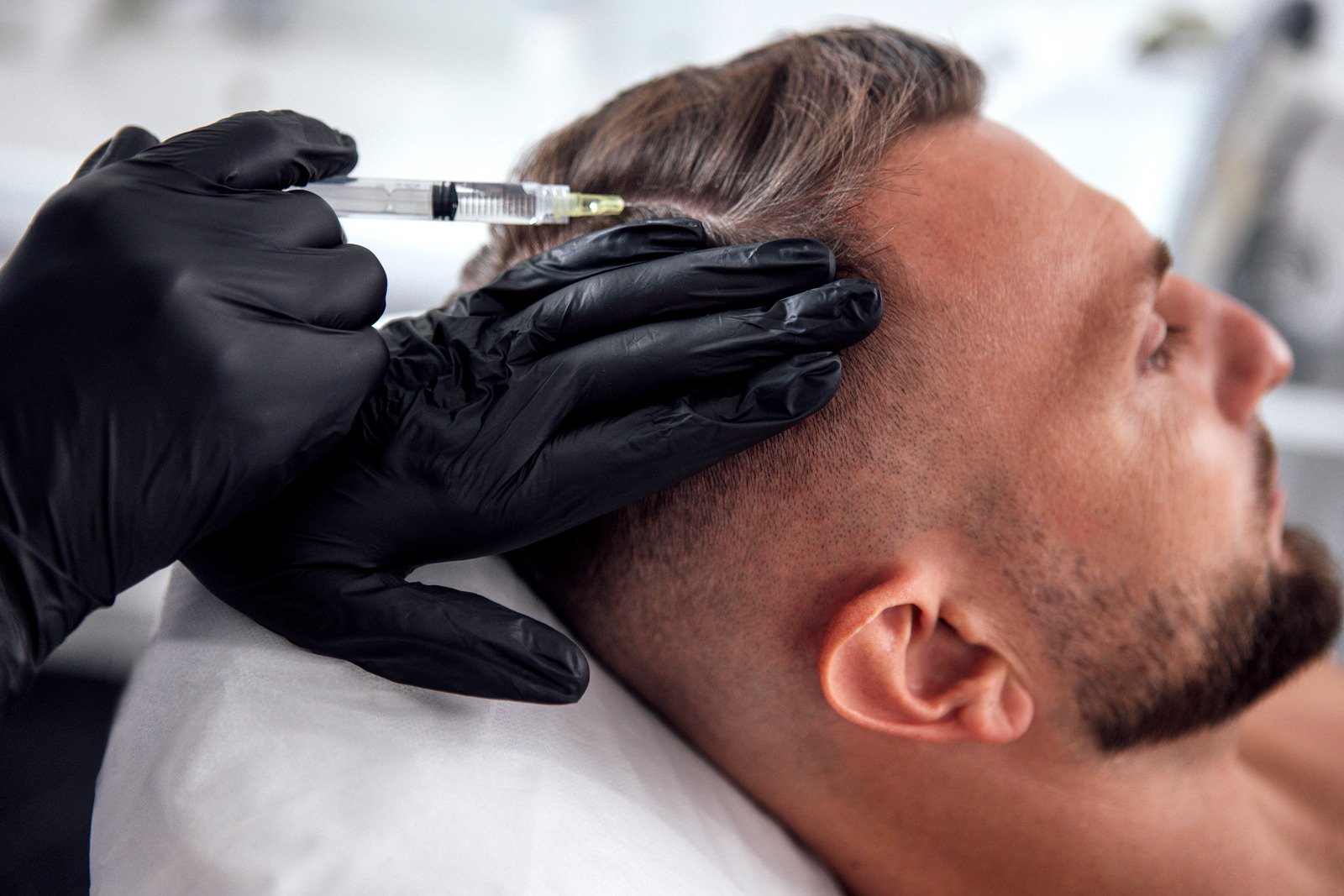
PRP treatment begins with a blood draw. The blood is processed to separate components and concentrate plasma containing platelets. The prepared platelet-rich plasma is then injected into targeted areas of the scalp.
Platelets are involved in normal healing and contain signaling molecules known as growth factors.
In hair restoration, PRP is used with the goal of supporting existing hair follicles and improving hair growth or thickness in appropriate candidates.
Does PRP Work for Hair Loss?
Research on PRP for hair loss is encouraging, particularly for androgenetic alopecia, but it should not be presented as a guaranteed solution.
The American Academy of Dermatology reports that studies suggest PRP can help reduce hair loss and may improve hair thickness or regrowth in some patients.
At the same time, results vary and research continues to evaluate which patients, preparation methods, and treatment schedules produce the most consistent outcomes.
PRP should therefore be viewed as one potential tool in a broader hair-restoration strategy, rather than a treatment that works equally well for every cause of thinning.
Who May Be a Good Candidate for PRP Hair Restoration?
PRP may be considered when there are still active hair follicles that could potentially respond to treatment.
People with early or progressive pattern thinning may be more reasonable candidates than someone expecting PRP to recreate hair in an area where follicles are no longer functioning.
Candidacy also depends on factors such as:
- The likely type and cause of hair loss
- How long the thinning has been occurring
- The degree of hair loss
- Scalp health
- Medical history
- Other treatments being used
- Realistic expectations
An individualized evaluation is important because the same treatment plan should not automatically be applied to every person with thinning hair.
Why Can Timing Matter With Hair Restoration?
Many forms of progressive hair loss become more difficult to address after substantial hair has already been lost.
The American Academy of Dermatology notes that treatment for hereditary hair loss tends to produce the best results when started relatively early.
That does not mean every person noticing a few extra hairs needs immediate PRP.
It means that persistent or progressive thinning is worth evaluating rather than waiting until the loss becomes advanced before determining what is causing it.
How Many PRP Hair Treatments Are Needed?
PRP is generally performed as a series rather than as a single one-time procedure.
The exact treatment schedule can vary based on the treatment protocol, type of hair loss, response, and provider recommendations.
The American Academy of Dermatology describes protocols for male-pattern hair loss that may begin with monthly treatments for several months followed by less frequent maintenance treatments.
Your recommended schedule should be based on your individual treatment plan rather than an assumption that everyone needs the same number of sessions.
How Quickly Will I See PRP Hair-Restoration Results?
Hair growth is slow, so hair-restoration results should be evaluated over months rather than days or weeks.
PRP does not instantly create new visible hair after an injection.
Changes may involve reduced shedding, improved thickness, or visible growth over time, depending on the individual and the underlying condition.
Standardized photographs taken under similar lighting, angle, hairstyle, and hair condition can make it easier to evaluate changes objectively.
Can PRP Be Combined With Other Hair-Loss Treatments?
Depending on the cause of hair loss, PRP may be only one part of a treatment strategy.
For example, established treatments for pattern hair loss can include medications such as minoxidil, while other causes may require correction of a deficiency or treatment of an underlying medical or scalp condition.
The appropriate combination depends on the diagnosis, medical history, treatment goals, and whether each option is appropriate for that individual.
Using multiple treatments is not automatically better. Each part of the plan should have a reason for being there.
When Should Hair Loss Be Evaluated by a Dermatologist?
Some hair concerns warrant specialist evaluation rather than proceeding directly to cosmetic hair restoration.
Examples can include:
- Sudden or rapidly progressing hair loss
- Distinct bald patches
- Scalp pain, significant itching, inflammation, or scaling
- Signs of scarring
- Loss involving the eyebrows or other body hair
- Hair loss associated with other unexplained symptoms
- Uncertainty about the diagnosis
- Hair loss that is not responding as expected to treatment
A dermatologist can perform additional examination and, when necessary, testing such as scalp biopsy to distinguish among different forms of alopecia.
Hair Restoration in Columbia, SC
At Vital Glow, our approach to hair restoration begins by looking beyond the fact that hair is thinning.
We consider the pattern and timing of the hair loss, relevant health history, scalp findings, and whether targeted laboratory evaluation may help identify contributing factors.
When appropriate, PRP may be incorporated into an individualized hair-restoration plan.
The goal is not to promise that one procedure can solve every type of hair loss. It is to develop a plan based on what may actually be contributing to yours.
Learn more about hair restoration at Vital Glow →
Frequently Asked Questions About PRP and Hair Restoration
Does PRP regrow hair?
PRP may improve hair growth or thickness in some people, particularly in certain forms of pattern hair loss, but results vary. It does not reliably restore hair for every type or degree of hair loss.
Is PRP FDA approved for hair loss?
PRP is prepared from a patient’s own blood and is used in a variety of medical settings. PRP hair-restoration treatment should not be described as an FDA-approved drug treatment for hair loss. Ask your provider about the evidence, expected benefits, limitations, and alternatives relevant to your situation.
Do I need blood work before PRP?
Not every person with hair loss requires the same laboratory testing. Blood work may be appropriate when the history, symptoms, or pattern of hair loss suggests an underlying medical, hormonal, or nutritional contributor.
Can low iron or thyroid problems cause hair loss?
Hair loss can occur in association with iron deficiency, thyroid disease, and other medical conditions. Whether testing is appropriate depends on your individual history and clinical findings.
How many PRP sessions will I need?
PRP is commonly performed as an initial series with possible maintenance treatments, but protocols vary. Your recommended schedule should reflect your type of hair loss, treatment plan, and response.
How long does it take to see PRP hair results?
Hair grows slowly, so meaningful changes generally require months to assess. Results and timing vary among patients.
Does PRP work if I am completely bald?
PRP is intended to support existing follicles rather than recreate follicles that are no longer functioning. Advanced areas of hair loss may therefore respond differently from areas of early thinning.
Should I take biotin for thinning hair?
Biotin should not automatically be assumed to improve hair loss. Nutritional supplementation is most appropriate when a relevant deficiency or clinical need has been identified.
Medically reviewed by Candace Danbury, MSN, APRN, FNP-BC.